
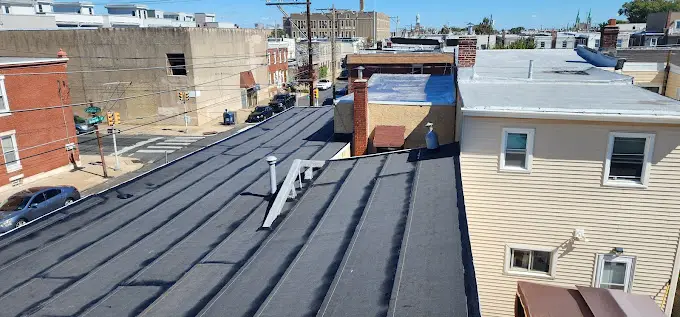
Philadelphia winters have a personality all their own. One day you’re enjoying a crisp, sunny walk down the Schuylkill River Trail, and the next, you’re shoveling six inches of heavy, wet snow off your sidewalk while the wind whips down Broad Street. We love our city, but the weather here doesn’t mess around. And if there’s one part of your home that takes the absolute brunt of that unpredictable mid-Atlantic winter, it’s your roof.
As second-generation roofers here at Discounted Roofing LLC, we’ve seen it all. We’ve seen what a surprise Nor’easter can do to a roof that wasn’t ready. We’ve seen how a few freeze-thaw cycles can turn a tiny crack into a living room waterfall. With over 30 years of experience serving Philly and the surrounding suburbs from Bensalem to King of Prussia, we know that a little preparation goes a long way.
So, grab a coffee, and let’s talk about how to get your home ready before the first real freeze hits. This isn’t just about avoiding leaks, it’s about peace of mind. Here is your comprehensive guide to winter roof prep in Philadelphia.
The Why Behind the Prep: Understanding Philly’s Freeze-Thaw Cycle
Before we dive into the checklist, it helps to understand exactly what we are fighting against. If it just stayed below freezing all winter, roofs might actually be happier. The snow would just sit there. But in Philadelphia, we constantly hover around that freezing mark. It rains, it freezes, it thaws, and then it freezes again.
This cycle is brutal for roofing materials. When water gets into a small crack in a shingle or a gap in your flashing and then freezes, it expands. That expansion pushes the crack open a little wider. When the ice melts, more water gets into that now-larger crack. When it freezes again? You guessed it: even more damage. This is how a roof that looked fine in October ends up leaking in February.
Preparing your roof isn’t just a chore, it’s a defensive strategy against physics.
Step 1: The Indoor Inspection (Yes, Start Inside)
Believe it or not, the best place to start your winter roof prep in Philadelphia is actually inside your house. Grab a flashlight and head up to the attic.
What you’re looking for isn’t always obvious. You aren’t just looking for dripping water. You want to look for signs of moisture that might have seeped in during the fall rains. Look at the underside of the roof deck (the plywood sheets). Do you see any dark stains? Any streaks? Even a small water stain indicates a breach in the system.
Also, turn off your flashlight for a moment and look for daylight. If you can see light peeking through the roof boards, water can definitely get in.
While you are up there, check your insulation. A lot of the ice dams we see in Philly row homes and suburban houses happen because the attic is too warm. If your insulation is matted down or missing, heat from your house escapes into the attic, melting the snow on the roof. That meltwater runs down to the cold eaves and refreezes, creating an ice dam. Proper insulation keeps the heat in your living space and the attic cold exactly how it should be.
Step 2: The Gutter Game Plan
If there is one thing you take away from this blog, let it be this: Clean your gutters.
We know, it’s nobody’s favorite weekend activity. But in our climate, clogged gutters are public enemy number one. Think about all those beautiful trees we have in Pennsylvania oaks, maples, sycamores. They drop a ton of leaves, and if you haven’t cleaned them out by December, you are setting yourself up for trouble.
When gutters are clogged with wet, rotting leaves, they freeze into a solid, heavy block of ice as soon as the temperature drops. This creates two major problems:
- Weight: That ice is heavy. It can literally rip the gutters right off your fascia boards, causing damage to the wood and the exterior of your home.
- Ice Dams: When the gutters are clogged, melting snow has nowhere to go. It backs up under your shingles. Once water gets under the shingles, it can leak directly into your walls and ceilings.
Get up there (safely) and clear out the muck. Make sure the downspouts are flowing freely. If the water isn’t moving away from your house, it’s going to end up in your basement or cracking your foundation when it freezes.
Step 3: Shingle Patrol
You don’t necessarily need to climb up on the roof to do a preliminary check (and honestly, we don’t recommend you climbing up there once it’s icy or wet). Grab a pair of binoculars and do a walk-around of your property.
Scan your roof for the obvious red flags:
- Missing Shingles: If a shingle blew off during a fall storm, the underlayment is exposed. That paper-thin layer isn’t designed to hold back a winter’s worth of snow.
- Curling or Buckling: Shingles that are curling up at the edges or buckling in the middle have reached the end of their life. They become brittle in the cold and can easily snap off.
- Granule Loss: If your shingles look bald or you see a ton of little ceramic granules in your gutters, your roof is losing its sun protection.
In Philadelphia, where we have a lot of older homes with slate roofs (especially in areas like Germantown or West Philly), look for slipped or cracked slates. A sliding slate tile is a guillotine waiting to happen, and it leaves a gaping hole for snow to enter.
Step 4: Flashing and Penetrations
The field of the roof (the flat, shingled parts) is rarely where leaks start. Leaks almost always start at the “penetrations” the places where things stick out of the roof. We’re talking about chimneys, vent pipes, skylights, and exhaust fans.
These areas are sealed with metal flashing and caulk. Over time, metal rusts and caulk dries out and cracks. In the summer, a tiny crack in the caulk around your chimney might not leak much because the rain runs off quickly. But in winter? Snow piles up against the chimney. As it slowly melts, that water sits there, looking for any way in.
If you have a chimney, check the masonry as well. Spalling bricks (where the face of the brick pops off) or missing mortar can allow water to wick straight into your attic.
Step 5: Trim Those Trees
We love the greenery in our neighborhoods, but overhanging branches are a nightmare for roofs in winter.
When we get an ice storm and you know we always get at least one bad storm after which ice accumulates on tree branches. This makes them incredibly heavy. A branch that looks perfectly safe in July can snap under the weight of ice in January and come crashing down on your roof.
Even if the branch doesn’t break, wind can whip it back and forth, causing it to scrape against your shingles like sandpaper. Over the course of a winter, this can strip the protective granules right off your roof.
Take a look at the trees surrounding your home. If any branches are hanging directly over your roof, or are within touching distance, hire a tree trimmer to cut them back. It’s a lot cheaper to trim a tree than to rebuild a rafter.
Step 6: The Invisible Ventilation Check
This ties back to our attic inspection, but it’s worth its own section. Your roof needs to breathe.
In the winter, we tend to seal our houses up tight to keep the heat in. But your attic needs airflow to keep the roof deck cool and to remove moisture. If you look at your eaves (the overhang of the roof), you should see vents (soffit vents). Make sure these aren’t painted over or blocked by insulation.
If your attic can’t breathe, warm, moist air from your house (from cooking, showering, breathing) rises up and gets trapped. It hits the cold plywood of the roof and condenses into water droplets or frost. When that frost melts, it rains in your attic. We have gone on plenty of “leak” calls that turned out to be condensation issues because the roof ventilation was blocked.
Why You Need a Professional Roof Inspection in Philadelphia?
We have covered a lot of DIY checks here, and as a homeowner, you should absolutely be doing them. But there is a limit to what you can see from the ground or with a flashlight in the attic.
This is where the term “roof inspection Philadelphia” becomes a necessity.
A professional roofer sees things the untrained eye misses. At Discounted Roofing LLC, when we do an inspection, we aren’t just looking for missing shingles. We are looking at the integrity of the rubber boots around your vent pipes. We are checking the seal on your skylights. We are looking for spongy spots on the deck that indicate rotting wood underneath the shingles.
We also know the specific quirks of Philly architecture. We know how to handle the flat roofs of South Philly row homes, ensuring the silver coating (bitumen) is fresh and crack-free. We know how to navigate the steep pitches of Victorian homes in the suburbs.
Winter roofing is dangerous work. Sloped roofs are slippery even when they look dry (thanks to morning frost). We have the safety gear, the insurance, and the training to walk your roof safely. Don’t risk a fall just to check a piece of flashing.
What If Something Goes Wrong?
Even with the best preparation, Mother Nature sometimes wins. A tree might fall, or a severe windstorm might rip up a section of older roofing.
If you find yourself with a leak in the middle of a storm, don’t panic.
- Contain the damage: Put a bucket under the leak and move your furniture/electronics.
- Don’t go on the roof: We cannot stress this enough. Going up on a storm-damaged roof in the middle of winter is life-threatening.
- Call the pros: We offer emergency services because we know water doesn’t wait for business hours.
A Note on Flat Roofs
A huge portion of Philadelphia’s housing stock consists of row homes with flat roofs. If you live in one of these, your winter prep is slightly different. You need to ensure your drains are clear. Flat roofs don’t shed water, instead, they rely on internal drains or scuppers. If those clog, you essentially have a swimming pool on your roof. When that pool freezes, the weight can be catastrophic.
Also, check the coating. Flat roofs usually rely on a reflective coating to protect the bitumen rolls. If that coating is flaking or worn thin, winter is the time to apply a fresh coat (weather permitting) or patch the seams.
Summary: Your Winter Prep Checklist
To make this easy, here is a quick recap of what you need to do before the snow flies:
- Attic Check: Look for stains and daylight. Ensure vents are clear.
- Gutter Clean: Remove all leaves and debris. Check downspouts.
- Perimeter Walk: Use binoculars to spot missing shingles or damage.
- Tree Trim: Cut back overhanging limbs.
- Schedule a Pro: Book a roof inspection Philadelphia experts trust.
Final Thoughts from Your Local Roofers
At the end of the day, your roof is the shield that protects your family and your biggest investment. Philadelphia winters are charming, the lights on Boathouse Row, the holiday markets, but they are hard on our homes.
Don’t wait until you see a stain on your ceiling to think about your roof. By then, the damage is done, and repairs are much more difficult (and expensive) in the freezing cold.
At Discounted Roofing LLC, we pride ourselves on being reliable, affordable, and experienced. We aren’t a big, faceless corporation, we are your neighbors. We’ve been keeping Philly dry for over 30 years, and we’d love to help you get through this winter worry-free.
If you aren’t sure about the state of your roof, or if you just want that peace of mind, give us a call. We’ll come out, take a look, and give you an honest assessment, no upsells, just the truth.
Stay warm, Philly. And Go Birds!