
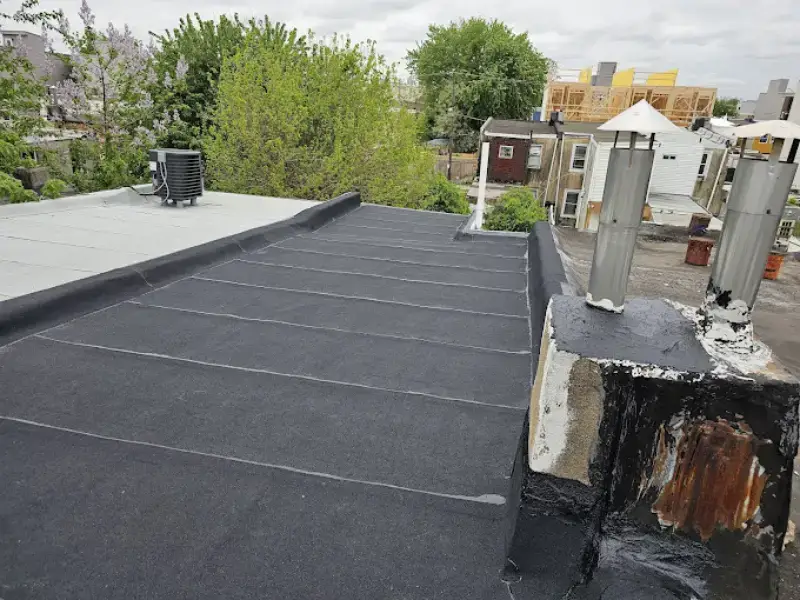
It is incredibly common for the commercial building envelope to remain out of sight and out of mind until water makes an unexpected, disruptive appearance inside the facility. When facility directors finally decide to address their overhead protection, the very first question we receive is almost always about pricing. Specifically, budget-conscious management teams want to accurately determine the commercial roof inspection cost before formally scheduling a site visit.
To give you an immediate baseline, standard visual evaluations typically range from $300 to $800, while massive industrial facilities often see rates calculated between $0.05 and $0.10 per square foot. Between managing daily staff operations, balancing increasingly tight fiscal budgets, overseeing complex supply chains, and ensuring total customer satisfaction, business owners naturally prioritize immediate operational needs. We completely understand these competing priorities. Let us deeply break down the standard industry numbers and proactive strategies.
Understanding the Baseline Averages for Building Owners
When reaching out to a local commercial contractor to evaluate a specific property, having a clear, transparent baseline helps immensely with the initial corporate budgeting process. Pricing varies across the industry based on fluctuating regional labor rates and changing material costs, but we can easily establish a reliable framework for you.
The comprehensive evaluation fee generally ranges from a few hundred dollars to a few thousand, depending heavily on the physical footprint, the known age, and the overall structural complexity of the facility.
For a standard, mid-sized industrial warehouse, a traditional retail strip center, or a basic suburban office building featuring a standard TPO or EPDM surface, property managers can comfortably expect to allocate anywhere from $300 to $800 for a thorough visual walkthrough conducted by a fully certified expert who understands commercial architecture.
Breaking Down Minimum Trip Charges and Base Fees
To accurately forecast annual maintenance budgets, it is helpful to deeply understand the standard operational logistics behind formally dispatching a dedicated commercial crew to a specific property. Even for a very small stand-alone retail shop, a local branch bank, or a boutique restaurant, professional roofing companies typically have non-negotiable minimum trip charges built directly into their established service models.
Therefore, a legitimate, truly comprehensive structural evaluation rarely drops below the $250 to $300 mark. This is simply because the basic economics of the commercial service industry dictate a strict baseline operational cost to adequately cover commercial vehicle fuel, specialized liability insurance premiums, and the hourly wages of highly trained, experienced technicians.
We generally advise our commercial clients to carefully evaluate any service quotes that come in substantially lower than this standard baseline to ensure high quality.
What Factors Drive the Commercial Roof Inspection Price?
Facility managers frequently notice that a neighboring business might pay one specific rate for their retail plaza, while a large industrial facility receives a completely different financial estimate from the exact same contractor. The commercial roof inspection price fluctuates naturally based on several critical, site-specific variables that must be carefully accounted for.
Accessibility is a primary, undeniable factor in this calculation. If a building features a standard internal hatch or a permanent, OSHA-compliant caged ladder, getting a professional crew safely onto the surface is incredibly efficient.
However, if a building is exceptionally tall, features dangerous multi-level drops, or currently lacks safe access points, the contractor may need to secure specialized boom lifts or rig extensive safety harnesses to strictly comply with federal safety regulations, which naturally increases the total labor time and final invoice.
Evaluating Complimentary Assessments Objectively
When reviewing annual maintenance budgets, managers often thoughtfully wonder if they should solely utilize companies eagerly offering complimentary visual assessments. It is a completely understandable financial consideration when actively trying to keep operational expenses as low as possible. Understanding the different business models within the commercial industry heavily clarifies these promotional offers.
When a company enthusiastically provides a complimentary look, the service is often structured fundamentally as an initial sales consultation rather than a standalone, objective diagnostic service. The representative visiting the property may be a commissioned salesperson whose primary corporate goal is to identify enough surface damage to confidently quote a complete, highly lucrative system replacement. In sharp contrast, a paid, fully independent assessment from a reputable commercial company completely changes the entire dynamic of the visit, providing entirely unbiased structural data for your records.
Commercial vs. Residential: Why the Roof Inspection Cost Differs
It is quite common for newly appointed facility managers or small business owners to research local pricing online and unfortunately find themselves reviewing residential numbers by mistake.
A typical residential roof inspection cost is usually much lower, often hovering around the $150 to $300 mark for a standard single-family suburban home. Commercial systems, however, are fundamentally different, engineered structures, and the two simply cannot be accurately compared.
Commercial properties extensively involve highly complex internal drainage networks, massive concrete parapet walls, and multiple thick layers of specialized flat materials like TPO, PVC, EPDM rubber, or Modified Bitumen. Furthermore, commercial decks are frequently crowded with heavy mechanical equipment, massive HVAC units, commercial skylights, and active exhaust vents.
A commercial business is specifically paying for a specialized expert who intimately understands these complex industrial systems inside and out.
The Financial Benefits of Routine Commercial Roof Maintenance
Allocating precious, hard-earned operational funds to closely examine a ceiling that is not actively dripping water can sometimes feel difficult to rationally justify to a board of directors. However, implementing regular commercial roof maintenance consistently proves to be an incredibly sound long-term financial strategy for extensive property management.
When a seasoned, highly experienced professional evaluates the protective surface, their primary goal is to clearly identify tiny, seemingly insignificant structural changes before they have the chance to fully develop into larger, vastly more complex issues.
Consider a small, one-inch separation in a TPO membrane seam or a slowly accumulating pile of fall leaves partially obstructing a primary scupper drain. Those isolated, minor issues might only require a minimal financial investment to permanently fix today, completely preventing thousands of dollars in future interior water damage and structural decay.
Warning Signs That You Need an Immediate Evaluation
To help you accurately determine exactly when it is time to bring a dedicated professional on-site, we have compiled a list of clear warning signs. If you routinely notice any of the following concerning issues around your commercial property, do not wait for the situation to worsen:
- Visible Water Stains: Discolored, yellowish, or brownish patches suddenly appearing on your interior drop ceiling tiles or running down the painted drywall inside the facility.
- Unpleasant Musty Odors: A persistent damp, moldy, or stale smell actively circulating within the building, particularly noticeable near the upper floors or interior warehouse spaces.
- Sagging Decking: If authorized personnel safely walk on the overhead surface and immediately notice soft, noticeably spongy, or structurally sagging areas under their work boots.
- Increased Energy Bills: A sudden, completely unexplained spike in your monthly commercial heating or cooling utility costs, heavily indicating wet internal insulation.
- Clogged Drainage: Heavy storm water that stubbornly remains heavily ponding on the flat surface for more than forty-eight hours after a standard seasonal rain event.
Step by Step: Utilizing Our Roof Inspection Checklist and Process
Understanding exactly what happens when our professional crew safely arrives can easily help alleviate any logistical concerns for your busy management team. Here are the step-by-step instructions detailing exactly how we conduct our thorough structural evaluations:
Step 1: The Initial Consultation and Interior Assessment
First things first, we sit down with your facility manager. We want to hear the building’s history from the people who actually work in it every day. Have there been mysterious ceiling drips? Any old patch jobs we should know about? Before we ever climb a ladder, we walk the inside of the building to check the underside of the roof deck for hidden water stains.
Step 2: Safe Access and Surface Walkthrough
Safety is non-negotiable for us, so we set up our ladders or lifts strictly by the book. Once we are up top, we do not just wander around aimlessly. We walk the entire expansive field in a tight grid. We are looking for the obvious stuff first, like tears in the membrane, sun-baked materials, or spots where water just sits and refuses to evaporate.
Step 3: Utilizing Our Diagnostic Framework
To make sure we never miss a beat, our crew follows a strict routine on every single job. You will always see us carrying our dedicated roof inspection checklist. It keeps us completely honest and guarantees we look at every single component of your system, step by step, without skipping over the little details that usually cause the biggest headaches down the road.
Step 4: Examining Seams, Flashings, and Drainage
We spend a huge chunk of our time literally getting down on our hands and knees to check the seams where the heavy membrane rolls overlap. If a seam is pulling apart, water will inevitably find it. We also check the metal edging around the perimeter and clear out any debris blocking your scuppers or drains, making sure water actually flows off the building.
Step 5: Final Documentation and Reporting
After we safely conclude the physical evaluation, we carefully compile all of our collected data, moisture readings, and time-stamped digital photographs into a highly comprehensive, ‘easy to read’ diagnostic report for your permanent corporate records.
Accurately Budgeting for Future Capital Expenditures
Equipped with a detailed, highly professional diagnostic report, facility directors are fully empowered to make strategic, truly data-driven decisions regarding their management budgets for the upcoming fiscal years. Management teams can confidently sit down with internal financial departments, demanding corporate boards, or independent investors and accurately plan for the future without heavily relying on vague estimations.
If the collected professional data actively supports carefully applying an elastomeric coating system to effectively extend the functional life of the surface, that specific calculated cost can be accurately weighed against the substantial capital required for a complete, highly disruptive system replacement. Information is an incredibly powerful tool in modern commercial real estate management today, giving you true control over your overhead expenses and long-term facility investments.
Frequently Asked Questions
- How often should a commercial facility be evaluated?
A. We generally recommend having a formal professional evaluation conducted at least twice a calendar year. Ideally, you should carefully schedule one comprehensive visit in the spring to properly assess any hidden structural damage from harsh winter weather, and one in the fall to fully prepare the building envelope for freezing temperatures. - Will the evaluation process disrupt our daily business operations?
A. Not at all. We take professional pride in working quietly, safely, and highly efficiently. Aside from our brief initial interior walkthrough, the vast majority of our diagnostic work is conducted securely on the exterior surface, completely out of the way of your active staff, your inventory, and your visiting customers. - Do you provide a written estimate for recommended repairs?
A. Absolutely. Included directly within your final comprehensive written report is a strictly prioritized list of highly actionable recommendations. We clearly and explicitly separate urgent emergency fixes from minor cosmetic issues, and we provide transparent, highly detailed financial estimates for every single proposed repair to help you accurately plan your budget. - Can you evaluate a commercial property before we finalize a real estate purchase?
A. Yes, we frequently partner with commercial real estate investors and corporate property buyers. Having us deeply examine a specific property before officially closing is one of the smartest financial decisions you can make, as it clearly reveals any completely hidden structural liabilities before you take full legal ownership. - Are your diagnostic technicians fully insured and certified?
A. Yes, every single active member of our dedicated diagnostic crew is fully licensed, heavily insured, and strictly factory-certified by major commercial material manufacturers. We carry highly comprehensive commercial liability insurance and workers’ compensation policies to fully protect your growing business and our dedicated team.
Conclusion
Investing in a highly thorough, deeply professional evaluation of a commercial building’s exterior envelope is a highly strategic, fundamental business practice for any successful enterprise. It completely removes the inherent uncertainty of the unknown, actively equips management teams with concrete structural data, and aids immensely in accurately budgeting for future capital expenditures. By proactively scheduling routine professional evaluations, forward-thinking businesses can safely optimize their internal maintenance capital and ensure a completely dry, safe environment for their daily operations.
Ready to get a clear, completely transparent picture of your commercial property’s structural health without any high-pressure sales tactics or hidden fees? Reach out to DISCOUNTED ROOFING LLC. We proudly provide honest, detailed structural assessments strictly tailored to the highly specific needs of your commercial property in the United States. We understand the unique challenges of facility management, so contact us today to rapidly schedule your comprehensive evaluation and take a highly proactive step in protecting your commercial investment.