
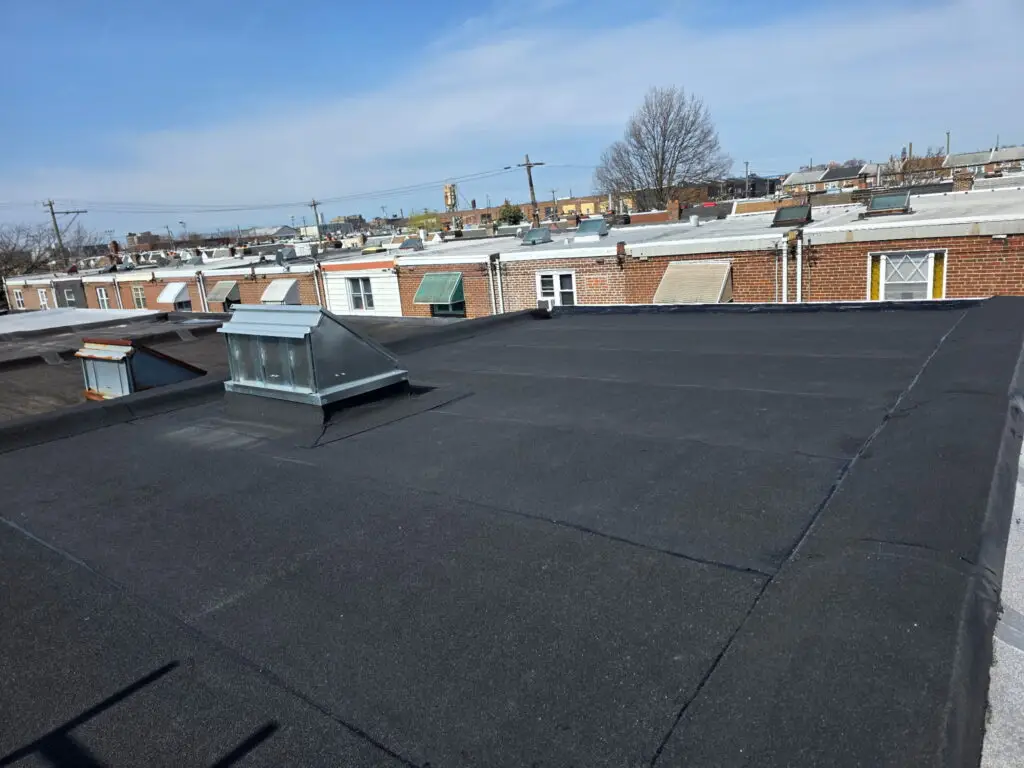
Quick Answer: Flat roofs have a very slight slope, cost less to build upfront, and give you usable space for things like AC units or solar panels. Pitched roofs have a sharp angle that relies on gravity to dump water instantly. They cost a lot more to frame initially, but they usually outlast flat systems by decades.
Most people just look at a roof and think about the color of the shingles. But if you’re building an addition or a custom home, choosing between a flat roof vs. pitched roof is a big structural choice. You’re basically deciding how your house will fight off rain, handle snow weight, and manage your indoor temperature for the next thirty years.
We always tell our clients that the shape of their framing changes everything. A flat design gives you that sleek, modern look. A steep pitch means you rarely have to worry about standing water. Before you sign a big contractor estimate, you need to know exactly what you’re buying into. Our complete residential roofing guide covers the basics of structural framing, but right now, let’s get into the nitty-gritty. Here is the real-world breakdown of what both systems actually cost, the daily headaches of each, and how they perform when the weather gets nasty.
Quick Comparison Matrix: Flat vs. Pitched Roof at a Glance
Here is how these two styles stack up against each other out in the real world.
| Feature | Flat Roof | Pitched Roof | Best Application |
| Cost | Lower upfront | Higher upfront | Budget-conscious |
| Lifespan | 20–30 years | 30–50+ years | Long-term homes |
| Maintenance | Higher frequency | Lower frequency | Mild climates |
| Drainage | Internal drains | Gravity runoff | High-rain areas |
Understanding the Core Differences in Roof Design
You really have to understand the mechanics before signing a contract. The shape of the framing dictates everything from your winter heating bill to how often you’ll be climbing a ladder to clean your gutters. If you want a deep dive into how structural integrity works, our complete residential roofing guide covers exactly how slope impacts your home’s overall lifespan.
What Defines a Flat Roof? (Low-Slope Mechanics)
Here is a trade secret: flat roofs are never actually flat. We build them with a tiny slope. They usually drop about a quarter-inch for every foot of distance. You can’t see the angle from your driveway, but it provides just enough tilt to guide rainwater into scuppers or internal drains.
What Defines a Pitched Roof? (Steep-Slope Mechanics & Angle Variations)
A pitched roof relies entirely on gravity. By building a steep, highly visible angle, rain and snow slide right off the sides. We frame everything from gentle slopes on classic ranch houses to aggressive, steep peaks on A-frame cabins.
Flat Roofs: Pros, Cons, Materials, and Costs
Quick Answer: What are the disadvantages of a flat roof? Your biggest risks are pooling water, a shorter lifespan, and mandatory maintenance. Is a flat roof cheaper than a pitched roof? Yes, building one requires less lumber and labor.
The Major Advantages of Flat Roofs
- Usable Rooftop Space: Walk right out there. It’s a perfect spot to hide bulky AC units or set up solar panels.
- Modern Aesthetic: If you want that sleek, contemporary vibe, low-slope is the only way to go.
- Lower Initial Labor: Roofers spend way less time cutting and hauling trusses, keeping your construction bill down.
- Easy Access: When I do an inspection on a flat deck, I just walk around. I don’t need heavy safety harnesses.
The Disadvantages and Drawbacks of Flat Roofs
- Water Pooling: If leaves block just one drain, water sits on the roof and slowly eats through the membrane.
- Shorter Lifespan: The sun bakes flat surfaces all day. The materials just break down faster.
- No Attic: You lose out completely on traditional attic storage.
Popular Flat Roofing Materials
We don’t use shingles here. We use thick membranes to completely seal the deck. EPDM acts like a giant rubber inner tube that expands and contracts. TPO is a white membrane that bounces the sun’s rays away, keeping your electric bill low. PVC is super tough plastic, and Built-Up Roofs are the old-school tar and gravel jobs you see on older commercial buildings.
Flat Roof Cost Breakdown: Installation, Materials, and Long-Term Upkeep
You’ll generally spend between $4 and $10 a square foot on a new install. The upfront savings are great because you skip the complex wooden framing. But remember, over the next 20 years, you’ll be paying a crew to unclog drains and patch up failing seams.
Pitched Roofs: Pros, Cons, Materials, and Costs
Quick Answer: What are the advantages of a pitched roof? You get perfect water runoff, large attic space, and a system that lasts for decades. Are pitched roofs more expensive to build? Yes, the complex framing drives the initial price tag up.
The Major Advantages of Pitched Roofs
- Superior Water Runoff: Rain hits the deck and drops off instantly. No pooling, no leaks.
- Extended Durability: Because water sheds immediately, standard shingles survive 30 to 50 years easily.
- Huge Attic Space: That high peak gives you a huge area for storage or heavy insulation.
- Great Airflow: An empty attic breathes well, pulling hot air out of your house during intense July heatwaves.
The Disadvantages and Drawbacks of Pitched Roofs
- Complicated Framing: Building steep wooden trusses requires serious engineering and expensive lumber.
- Higher Costs: You’re covering a much larger surface area, which means buying way more material.
- Hazardous Work: Getting up there to fix a blown-off shingle is dangerous without professional gear.
Popular Pitched Roofing Materials
That steep angle lets you use overlapping materials. Asphalt shingles are cheap, reliable, and look great. Clay tiles are heavy and perfect for hot deserts. Slate lasts a century but costs a small fortune. Metal slicks off snow like nothing else. Trying to decide between the two most popular options? My breakdown of asphalt shingles vs. metal roofing will clear things up fast.
Pitched Roof Cost Breakdown: Framing, Labor, and Material Variability
Expect to drop anywhere from $5 to $15 per square foot. Want copper or slate? Double it. The steep price tag comes straight from the labor. Guys have to drag heavy bundles up ladders and nail them down while standing on a dangerous incline.
Cost Comparison: Is a Flat Roof Cheaper Than a Pitched Roof?
Quick Answer: Upfront, yes. A flat roof is cheaper. But over 20 years, the heavy maintenance of a flat roof usually catches up to the total cost of a pitched one.
Upfront Installation Cost Analysis per Square Foot
Flat designs win the initial estimate battle every time. Let’s say you have a 2,000-square-foot flat deck. That might run you about $12,000. Take that exact same house and pitch it, and you’re suddenly looking at $18,000 to $22,000. The lumber alone accounts for a large chunk of that difference.
Long-Term Maintenance and Replacement Cost Projections Over 20 Years
Here is the catch. A pitched roof sits there and does its job. You clean the gutters twice a year and forget about it. Flat roofs are needy. You have to pay someone to unclog scuppers and patch blisters. Then, right around year 20, you’re buying a whole new flat membrane, while a pitched roof still has a decade of life left.
Performance Showdown: Weather, Drainage, and Durability
Quick Answer: Which roof is better in heavy rain? Pitched roofs win, hands down. Which roof lasts longer? Pitched styles easily outlive flat systems.
Drainage and Water Runoff Capabilities
Pitched designs shed water the second it hits. Flat systems are basically shallow pools relying completely on drains. If a clump of wet oak leaves clogs that drain, you’ve got a serious flood. If you’re spotting water stains on your ceiling right now, check out the common signs your roof needs replacement before that tiny leak turns into serious drywall rot.
Wind Resistance and Severe Weather Performance
Flat roofs actually hold their own in hurricane territory. They lack a high profile, so extreme wind just blows right over them. Steep roofs act like sails. If a contractor did a sloppy job, high winds will rip those shingles right off the deck.
Insulation, Energy Efficiency, and Attic Space Differences
You can pack a pitched attic with thick, cheap fiberglass insulation. Flat designs force you to sandwich rigid foam boards between the ceiling and the deck. It leaves zero margin for error if you want to keep your energy bills low.
Which Roof Style is Better for Your Specific Property?
Residential Homes vs. Commercial Buildings
Look at any warehouse. They all have flat roofs because pitching a 50,000-square-foot building would cost millions. But for a house? Most homeowners want that classic pitched look and the zero-headache lifespan.
Architectural Compatibility and Regional Weather Considerations
If you deal with heavy snow every January, a pitched roof is non-negotiable. Heavy snow will literally crush a flat structure. But if you live in the dry Southwest? A flat design is a fantastic, modern, and totally practical option.
Why Choose Discounted Roofing LLC?
We’ve spent years on ladders, tearing off old decks across all kinds of properties. At Discounted Roofing LLC, we don’t mess around with flashy sales pitches. We give honest structural evaluations and totally transparent pricing. We see rotting membranes and botched flashing every single day. That’s exactly why we install things by the book, using manufacturer-certified techniques that actually protect your home. Don’t guess about the health of your house. Grab a free assessment and check out our professional roof installation services so we can figure out exactly what your property needs today.
Frequently Asked Questions
Q. What is the difference between a flat roof and a pitched roof?
A. Flat roofs have an almost invisible slope that uses drains to remove water. Pitched roofs have a highly visible, steep angle that uses gravity to shed water instantly.
Q. Is a flat roof cheaper than a pitched roof?
A. Yes, they cost much less initially. You skip the complicated wooden truss systems and use fewer raw materials.
Q. Which roof lasts longer?
A. Pitched styles easily take the win here. With decent materials, they last 30 to 50 years. A flat membrane typically gives out around year 20.
Q. Which roof is easier to maintain?
A. Pitched ones, by far. Aside from cleaning your gutters, they take care of themselves. Flat systems require constant checks to make sure water isn’t pooling.
Q. Can you convert a flat roof to a pitched roof?
A. You absolutely can, but it’s a massive job. A crew has to build a completely new wooden frame over your existing structure. It requires a really healthy budget.
Q. Why are flat roofs more prone to leaking?
A. Flat roofs can’t use gravity to shed rain instantly. If a drain clogs, standing water simply sits on the membrane until it finds a weak seam to leak through.
Q. Can you put solar panels on a flat roof?
A. Absolutely. The level, walkable surface makes it incredibly easy to mount heavy solar panels, hide HVAC units, or even build an outdoor deck.
Q. Which roof design is more energy-efficient?
A. Pitched roofs generally win. The large attic cavity acts as a thermal buffer, giving hot air a place to vent so your summer cooling bills stay low.
Q. Which roof handles high winds better?
A. Pitched roofs are actually much more aerodynamic. Their angled slope deflects wind smoothly, whereas flat roofs often face dangerous upward suction and pressure during severe storms.
Conclusion: Making Your Final Roofing Decision
Picking between these two designs boils down to your wallet, your local weather, and the look you want. Pitched roofs remain the gold standard for long-term durability and easy water drainage. Flat roofs give you a sharp modern look and cost way less initially.
Stop looking at just the upfront price tag. Think about what you’ll actually spend maintaining it over the next two decades. Give Discounted Roofing LLC a call today, and let’s get your project started right.